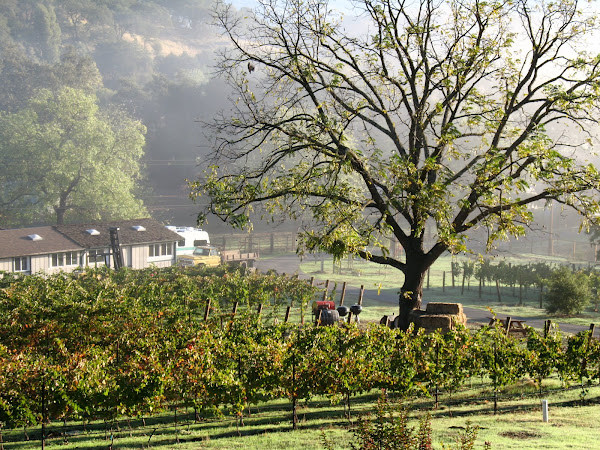
A week ago Sunday was decision time for growers and wineries in California as they contemplated the approaching storm that was carrying several inches of rain from typhoons that had struck on the other side of the Pacific Ocean. If you could believe the weather report, which in this case was dead on, it was something that you just could not ignore. The decision for me here in Morgan Hill was whether to pick the grapes that I planned to make wine with this year or let them ride out the impending deluge. The 2009 California wine grape crop was still aproximately 20% or more unharvested with varieties like cabernet still getting "hang time" and waiting for the right sugars to form along with the flavors that winemakers hope for to make their wines "complex".
Clos La Chance decided to wait to harvest their contracted portion (80% of our grapes). I decided, after a few phone calls for advice, to get the grapes. The risk of leaving the grapes was twofold. First the grapes would absorb water from the storm and the sugars, that were lower than the previous year would go down. The second risk was from mold. Usually a day of rain isn't fatal, especially if followed by a wind and dry days.
So I decided to pick. Heck, I thought, I didn't want to end up without grapes from my own vineyard to make our first batch of wine which we have been planning for several years. So on Monday we had a small crew bring the grapes in from the south vineyard block. The fruit was ready, according to Mike my winemaker friend who has started Wild Eye winery in San Benito County. The fruit had good flavors, the skins were soft and the seeds were ripe in most areas of the vineyard. As usual there was variation across the vineyard. We both thought the south block was the ripest. They were not, perhaps, as good as last year, which my wife Cathy confirmed, but they were good and ready. The birds thought so too and were taking a small share along with the bees. Nature had aligned to force our hand and we played it. Pick the grapes, Now!
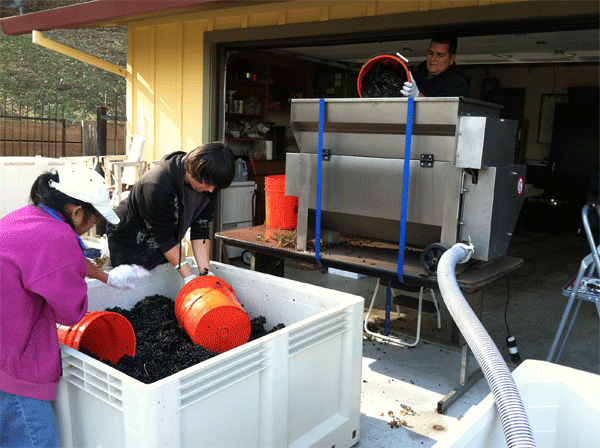
The sugar, however was on the low side at 22.5 Brix. Still high enough to make good wine but it would dictate the style. This would be interesting and perhaps a challenge. Forge ahead. My friend, Lucio, who works with me on the vineyard sometimes and has experience in these things thought they were ready too. He and his brother who works in a nearby winery and I crushed and destemmed on Monday night and by 730 pm the must (a combination of grape juice, seeds, and some stems, called "jacks") from a ton and a half of grapes was all safely inside our garage in three bins ready for innoculation of yeast. After a rest in the bins called a "cold soak" for 24 hours the yeast was pitched. The next day it rained almost five inches in 24 hours. I wondered if I had made the right decision but on Thursday there was a mad scramble all over the central coast to bring in the harvest. Hang time was over for many of the red grapes and even some chardonnay in this part of California's wine country.
A week later we still have balmy and damp weather, perfect for the formation of botrytis mold and bunch rot. The must has almost completed its transformation into wine a practically miraculous process. The color is the beautiful deep violet purple that Petite Sirah is famous for and also, as can be expected from Petite Sirah, the aromas have a nice ripe berry scent. Time will tell. The wine will go into barrels after we press it away from the skins in the next couple days.




 ...and they're eating the bird seed under the plum tree. We are currently preparing the property for the installation of a small wine making facility in hopes that our winemaker will make a great wine from the 2009 fall harvest. We have begun planting other grape varietals in small quantities on the property in front and back of house. More information will be shared as progress is made. Thank you for following our blog!
 As I write this, the vines are showing the first signs that the '09 growing season is well under way. As the daily temperatures rise the vines begin to bud and the official bud break for this season happened about three days ago for our vineyard. Different varieties of vinifera grapes leaf out at different times. Chardonnay, for instance, is usually earlier than Petite Sirah and many of the growers will prune twice to delay the bud break in areas where there is danger of frost.